Magazine dimensions determine how your publication looks, feels, and performs in the market. The right magazine size impacts everything from production costs to reader engagement. Choosing proper magazine formats ensures your content reaches audiences effectively while maintaining professional appeal.
Understanding standard magazine dimensions helps publishers, designers, and content creators make informed decisions.
Standard Magazine Dimensions
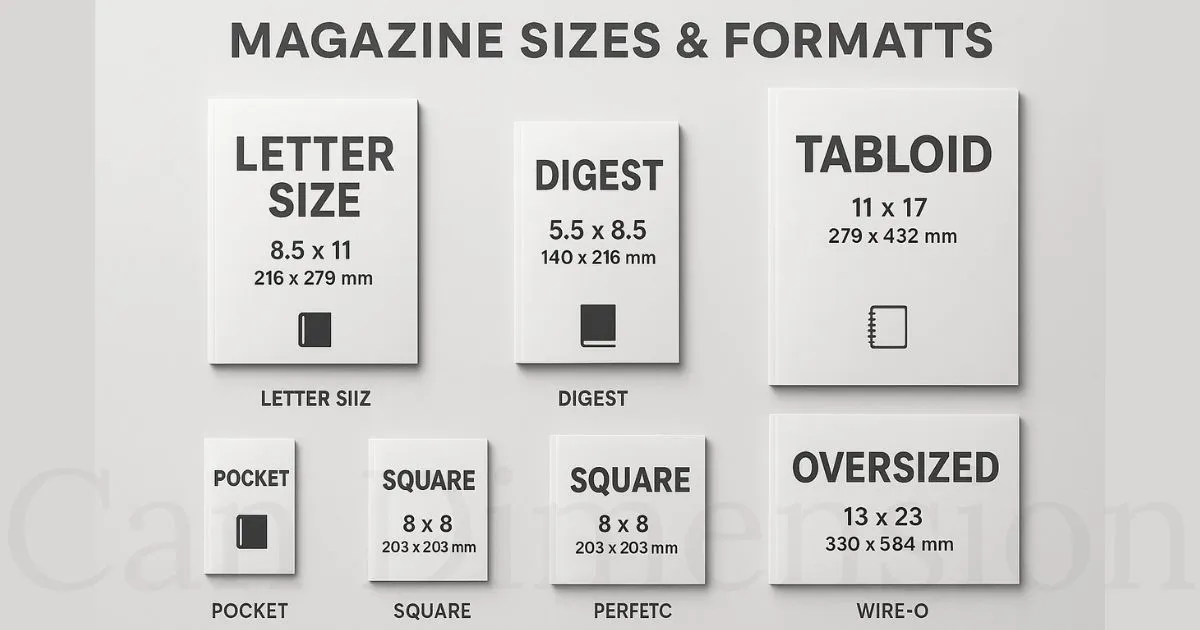
US magazine dimensions typically range from compact digest sizes to large tabloid formats. The most popular sizes include 8.5 × 11 inches (letter size), 5.5 × 8.5 inches (digest), and 11 × 17 inches (tabloid). Each format serves different content types and audience preferences.
| Magazine Format | Dimensions (inches) | Dimensions (mm) | Common Use | Examples |
|---|---|---|---|---|
| Standard Letter | 8.5 × 11 | 216 × 279 | Consumer magazines | Time, People, Vogue |
| Digest Size | 5.5 × 8.5 | 140 × 216 | Compact publications | Reader’s Digest |
| Tabloid | 11 × 17 | 279 × 432 | Large-format magazines | Entertainment Weekly |
| Pocket Size | 4 × 6 | 102 × 152 | Mini magazines | Travel guides |
| Square Format | 8.5 × 8.5 | 216 × 216 | Art & photography | Design magazines |
| Oversized | 9 × 12 | 229 × 305 | Premium fashion | High-end publications |
Letter Size Magazine (8.5 × 11 inches)

Letter size magazines represent the most popular format in American publishing. This standard magazine size measures 8.5 inches wide by 11 inches tall, matching common office paper dimensions. Publishers favor this format because it works seamlessly with standard printing equipment.
Time Magazine, National Geographic, and Cosmopolitan all use this magazine dimension. The format provides ample space for high-quality images, detailed articles, and effective advertising layouts. Readers find letter-sized publications easy to handle and comfortable to read.
Digest Size Magazine (5.5 × 8.5 inches)

Digest size magazines measure 5.5 × 8.5 inches, offering a compact and portable reading experience. This magazine format works perfectly for readers who want lightweight publications they can carry anywhere. The dimensions reduce paper costs while maintaining professional appearance.
Tabloid Size Magazine (11 × 17 inches)

Tabloid magazines feature impressive 11 × 17 inch dimensions that create dramatic visual impact. This large magazine format provides maximum space for stunning photography and bold graphic design. Entertainment publications, art magazines, and newspaper supplements commonly use tabloid sizing.
Magazine Binding Types and Their Impact on Dimensions
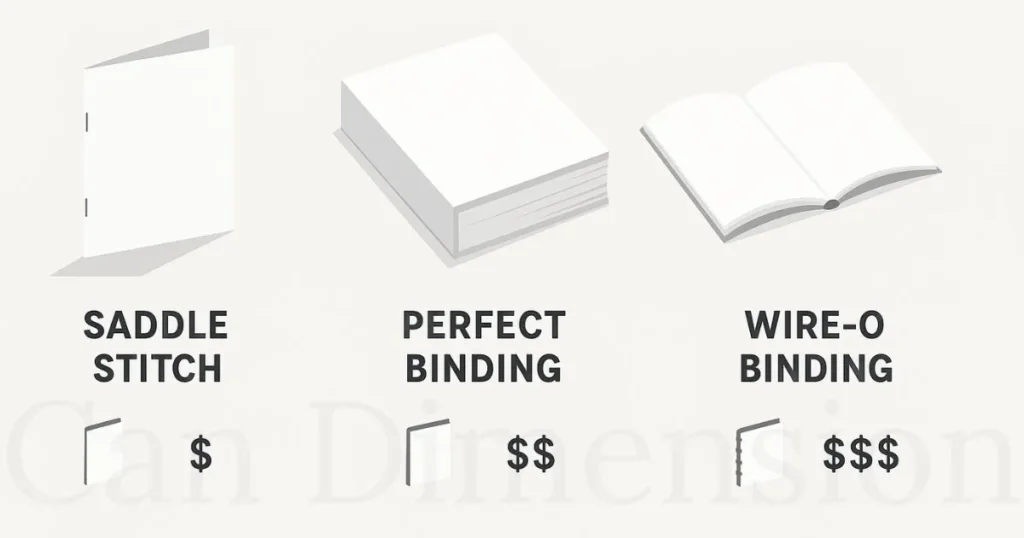
Magazine binding methods directly affect final dimensions, page capacity, and production costs. The three primary binding formats include saddle stitch, perfect binding, and wire-o. Each binding type suits different magazine sizes and page counts.
Saddle Stitch Binding
Saddle stitch binding uses metal staples through the magazine’s fold, creating a clean and economical finish. This binding method works best for 8 to 92 pages and suits most standard magazine sizes. The process allows magazines to lay reasonably flat when opened.
Saddle stitched magazines work perfectly for letter size (8.5 × 11 inches) and digest size (5.5 × 8.5 inches) publications. The binding supports frequent reading without pages falling out. Most commercial printers offer saddle stitching as their primary magazine binding service.
Perfect Binding
Perfect binding creates a squared spine similar to paperback books, offering premium appearance and durability. This magazine format requires minimum 28 pages and supports publications up to 240 pages. The binding glues pages directly to the spine, creating a professional finish.
Production costs run 50-60% higher than saddle stitching, but the premium appearance justifies the expense. The binding works best with letter size dimensions (8.5 × 11 inches) and heavier paper stocks. Libraries and collectors prefer perfect bound magazines for long-term preservation.
Wire-O Binding
Wire-o binding uses double-loop wire that allows magazines to lay completely flat. This binding format works perfectly for cookbooks, instruction manuals, and reference magazines. The binding supports frequent page-turning without damage.
Calendars, planners, and tutorial magazines commonly feature wire-o binding. The format enables 360-degree rotation, allowing readers to fold magazines completely back. However, production costs exceed other binding methods by 70-80%.
Wire-o bound magazines typically measure 8.5 × 11 inches or smaller. The binding prevents traditional spine printing, requiring alternative identification methods. Despite higher costs, the functionality makes wire-o binding ideal for working reference materials.
Specialized Magazine Sizes and Formats

Specialized magazine dimensions serve niche markets and unique publishing needs. These non-standard formats help publications stand out while meeting specific content requirements. Custom magazine sizes range from pocket-sized mini magazines to oversized premium publications.
Pocket Size Magazines (3.5 × 5 inches to 4 × 6 inches)
Pocket magazines measure between 3.5 × 5 inches and 4 × 6 inches, creating ultra-portable reading materials. These tiny magazine dimensions fit perfectly in purses, jacket pockets, and car glove compartments. Travel guides, poetry collections, and specialty publications favor this compact format.
Square Format Magazines (8 × 8 inches or 8.5 × 8.5 inches)
Square magazines typically measure 8 × 8 inches or 8.5 × 8.5 inches, creating distinctive visual presence. This unique magazine format suits art, photography, and design publications perfectly. The symmetrical dimensions offer balanced layouts that enhance creative content.
Oversized Magazines (9 × 12 inches and larger)
Oversized magazines start at 9 × 12 inches and can extend to 12 × 15 inches or larger. These premium magazine dimensions showcase high-end fashion, architecture, and fine art content. The expanded format creates luxurious reading experiences that justify premium pricing.
| Specialized Format | Dimensions | Best Use | Production Cost | Target Audience |
| Pocket Size | 3.5 × 5 to 4 × 6 inches | Travel guides, mini zines | Low (30% less) | Mobile readers |
| Square | 8 × 8 or 8.5 × 8.5 inches | Art, photography | Medium (15% more) | Creative professionals |
| Oversized | 9 × 12+ inches | Fashion, architecture | High (50-70% more) | Premium audience |
Digital vs. Print Magazine Dimensions

Digital magazine formats differ fundamentally from print specifications. Screen-based publications require pixel dimensions, while print magazines need physical measurements. Understanding both formats ensures content adapts properly across distribution channels.
Print and digital magazine dimensions serve different reading contexts and devices. Publishers creating multi-platform content must optimize for both mediums simultaneously. The technical requirements vary significantly between formats.
Print Magazine Specifications
Print magazines require 300 DPI resolution for professional quality reproduction. This high resolution ensures sharp text and crisp images when physically printed. CMYK color mode converts digital colors to printing ink specifications accurately.
Bleed areas extend 0.125 inches (3mm) beyond trim lines, preventing white edges after cutting. Safe zones maintain 0.25 inches margins from edges for critical content. These technical requirements ensure perfect magazine dimensions after printing and binding.
Paper weight affects final magazine thickness and durability. Text weight paper (60-100 lb) suits interior pages, while cover stock (80-130 lb) provides protective strength. Proper paper selection influences reader perception and handling experience.
Digital Magazine Dimensions
Digital magazines use pixel dimensions optimized for various screen sizes. Desktop viewers display best at 1024 × 1366 pixels, while tablets require 1536 × 2048 pixels for high-resolution screens. Smartphone formats typically measure 1080 × 1920 pixels for portrait viewing.
Screen resolution operates at 72-150 PPI rather than print’s 300 DPI requirement. RGB color mode displays accurately on backlit screens. Interactive elements including hyperlinks, videos, and animations enhance digital reading experiences.
Responsive design allows single content to adapt automatically across devices. PDF exports for digital distribution require different settings than print-ready files. File size optimization ensures fast loading without sacrificing visual quality.
| Format Type | Resolution | Dimensions | Color Mode | Orientation |
| 300 DPI | 8.5 × 11 inches | CMYK | Fixed | |
| Desktop | 72-150 PPI | 1024 × 1366 px | RGB | Landscape/Portrait |
| Tablet | 150 PPI | 1536 × 2048 px | RGB | Portrait |
| Mobile | 72-150 PPI | 1080 × 1920 px | RGB | Portrait |
Other Dimensions: Beer Can Label Dimensions: Size, Height and Length
FAQ’s
What Size is a Magazine?
Magazine sizes vary widely, but the most common format measures 8.5 × 11 inches in the United States. This standard letter size dominates consumer magazines including Time, People, and Better Homes & Gardens. Other popular dimensions include digest size (5.5 × 8.5 inches) and tabloid (11 × 17 inches).
What is the Standard Magazine Size in the United States?
The standard magazine size in America is 8.5 × 11 inches (216 × 279 mm). This format matches common printer paper dimensions, making production efficient and economical. Approximately 60-70% of US consumer magazines use this standard size.
How does Magazine Size Affect the Design and Readability of a Publication?
Magazine dimensions directly impact layout options and reading comfort. Larger formats (9 × 12 inches) showcase photography dramatically but feel cumbersome during extended reading. Smaller sizes (5.5 × 8.5 inches) offer portability but limit design creativity.
What are the Differences Between Pocket-Size, Digest-Size, and Standard Magazine Sizes?
Pocket magazines (3.5 × 5 inches) fit purses and pockets, ideal for quick-reference guides. Digest size (5.5 × 8.5 inches) offers portability with adequate content space, popularized by Reader’s Digest. Standard size (8.5 × 11 inches) provides maximum layout flexibility.
What Is the Standard Size of a Magazine?
The standard magazine format measures 8.5 inches wide by 11 inches tall in the United States. This dimension equals 216 mm × 279 mm in metric measurements. The format accommodates both portrait and landscape layout orientations.
What Is the Size of a Sports Magazine in Illustrator?
When designing sports magazines in Adobe Illustrator, create artboards at 8.5 × 11 inches for standard formats. Add 0.125-inch bleeds on all sides, making the total canvas 8.75 × 11.25 inches. Set resolution to 300 DPI for print-ready files.
How to Change the Size of a Magazine in InDesign?
Open your InDesign magazine file and select File > Document Setup. Click the Adjust Layout button to maintain element positioning during resizing. Enter new width and height dimensions in the appropriate fields.
What Is the Average Size of a Magazine Cover?
Magazine covers typically measure 8.5 × 11 inches for standard publications. Fashion magazines often use 9 × 10.875 inches, while digest formats measure 5.5 × 8.5 inches. Cover dimensions always match interior page sizes.
How Do You Design a Perfect-Size Magazine in InDesign?
Start by creating a new document in InDesign with dimensions matching your chosen format (8.5 × 11 inches for standard). Enable Facing Pages for spread viewing. Set 0.125-inch bleeds and 0.25-inch margins on all sides.
What Size is a Vogue Magazine?
Vogue magazine measures 8 inches wide by 10.875 inches tall, creating a distinctive tall format. This custom magazine dimension differs from standard letter size, giving Vogue its signature elegant appearance. The format showcases full-length fashion photography effectively.
What Are the Dimensions of a Magazine?
Magazine dimensions range from pocket size (3.5 × 5 inches) to oversized formats (12 × 15 inches). The most common sizes include standard letter (8.5 × 11 inches), digest (5.5 × 8.5 inches), and tabloid (11 × 17 inches).
What Is the Size of a Magazine Cover in Photoshop?
Create magazine covers in Photoshop at actual print dimensions plus bleeds. For standard magazines, set canvas to 8.75 × 11.25 inches (8.5 × 11 inches plus 0.125-inch bleeds). Set resolution to 300 pixels/inch for print quality.
How to Create a Professional Magazine Layout?
Professional magazine layouts start with proper dimension selection and grid systems. Establish column structures (typically 3-4 columns for 8.5 × 11 inch magazines). Use consistent typography with 2-3 font families maximum.
How Do You Measure the Size of a Magazine?
Measure magazine dimensions from the trim edge (where pages are cut) rather than bleeds. Use a ruler or measuring tape to determine width and height in inches. Measure closed magazines from left edge to right edge for width.
Conclusion
Magazine dimensions fundamentally shape publishing success through production costs, reader experience, and market positioning. The standard 8.5 × 11 inch format dominates US publishing for good reasons: printing efficiency, distribution compatibility, and reader familiarity. However, specialized formats serve niche markets effectively when properly matched to content and audience needs.