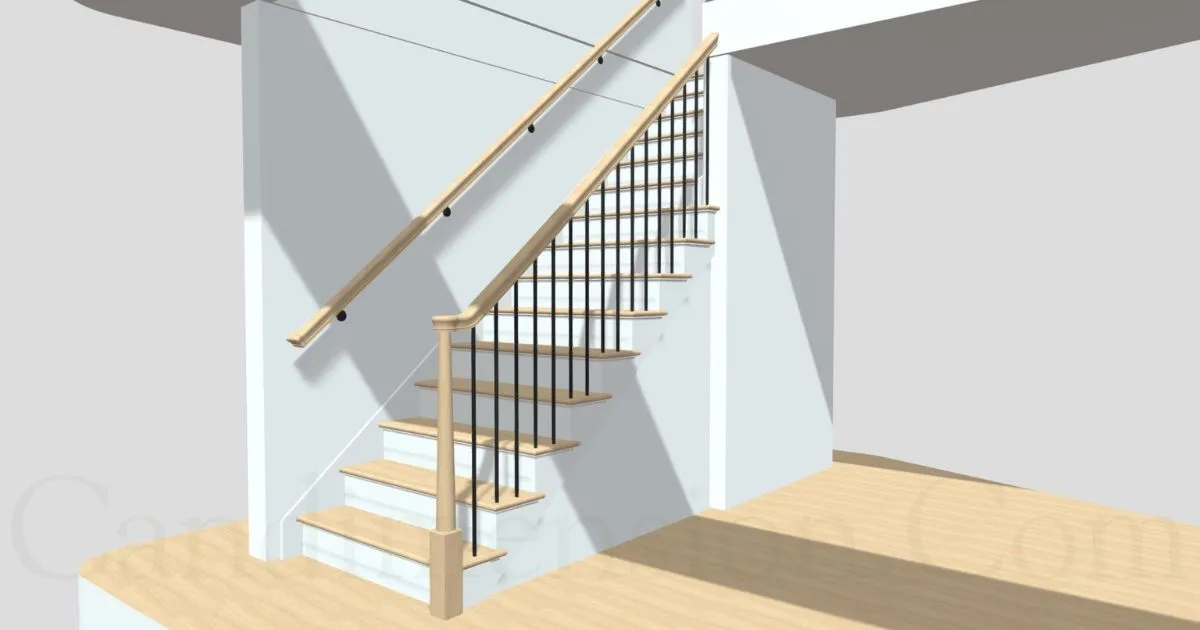
Building or remodeling stairs? Getting the dimensions right isn’t just about aesthetics. It’s about safety, comfort, and meeting building codes.
Standard stair dimensions follow specific guidelines for a reason. A staircase with proper measurements prevents falls, reduces fatigue, and makes daily use effortless.
Whether you’re a homeowner planning a renovation or a builder working on a new project, understanding these measurements is essential.
Summary
Standard stair dimensions require 7-8 inch risers, 10-11 inch treads, and 36-48 inch width for safe, comfortable stairs. Key formulas include the 7-11 rule, 17-18 inch rule (rise + run), and 25 inch rule ((2 × riser) + tread = 24-26″) to create optimal 30-37 degree angles. Building codes mandate maximum 7.75-inch risers, minimum 10-inch treads, 6 feet 8 inches headroom, and 3/8 inch riser consistency. Proper staircase measurement and calculation following IRC standards prevents falls, ensures code compliance, and creates comfortable daily use.
What Are Standard Stair Dimensions?

Residential staircases follow three critical measurements. The riser height sits between 7 and 8 inches. The tread depth ranges from 10 to 11 inches. The stair width spans 36 to 48 inches.
These numbers aren’t random. They’re based on decades of research into human movement and safety. The average person’s stride naturally fits these proportions. When stairs fall outside these ranges, accidents increase dramatically.
Building codes enforce these standards for good reason. The International Residential Code (IRC) sets minimums and maximums. Most residential stairs must have risers no higher than 7.75 inches and treads no less than 10 inches deep. Consistency matters too—each riser can vary by only 3/8 of an inch throughout the entire flight.
Riser Height and Tread Depth

Riser height is the vertical measurement from the top of one step to the top of the next. The sweet spot sits at 7 to 7.5 inches. This height lets most people climb without excessive effort or strain on their knees.
Going too high creates problems fast. A 9-inch riser might technically meet some code maximums, but it exhausts users quickly. Children and elderly people struggle with tall risers. Falls become more likely, especially when descending.
Tread depth measures the horizontal surface where your foot lands. The standard calls for 10 to 11 inches minimum. This gives your entire foot a stable landing zone. Shallow treads force you to walk on your toes, creating instability.
The relationship between riser and tread creates the overall stair geometry. When one increases, the other should decrease slightly.
This balance keeps the stair angle in the comfortable 30 to 37-degree range. Steeper stairs tire you out. Shallower stairs waste space and feel awkward.
Essential Stair Design Rules and Calculation Formulas

Professional builders rely on proven formulas. These rules have stood the test of time because they work consistently.
The 7-11 Rule combines a 7-inch rise with an 11-inch run. This pairing creates the most universally comfortable stairs. The angle falls perfectly in the optimal range. Both the IRC and IBC building codes align with this standard.
The 17-18 Inch Rule adds your rise and run together. The sum should equal 17 to 18 inches. For example, a 7-inch riser plus an 11-inch tread equals 18 inches. This matches the natural stride length of most adults. Going below 17 inches or above 19 inches disrupts your walking rhythm.
The 25 Inch Rule uses a different calculation. Multiply your riser height by two, then add the tread depth. The result should fall between 24 and 26 inches, with 25 being ideal. Example: (2 × 7 inches) + 11 inches = 25 inches. This formula ensures comfortable ascent and descent.
Calculating your total stairs starts with measuring the total rise. This is the vertical distance from your bottom floor to your top floor. Divide that number by your ideal riser height of 7 inches. Round to the nearest whole number to get your step count. Then divide your total rise by that number of steps to get your actual riser height.
Standard Staircase Width and Clearance Requirements
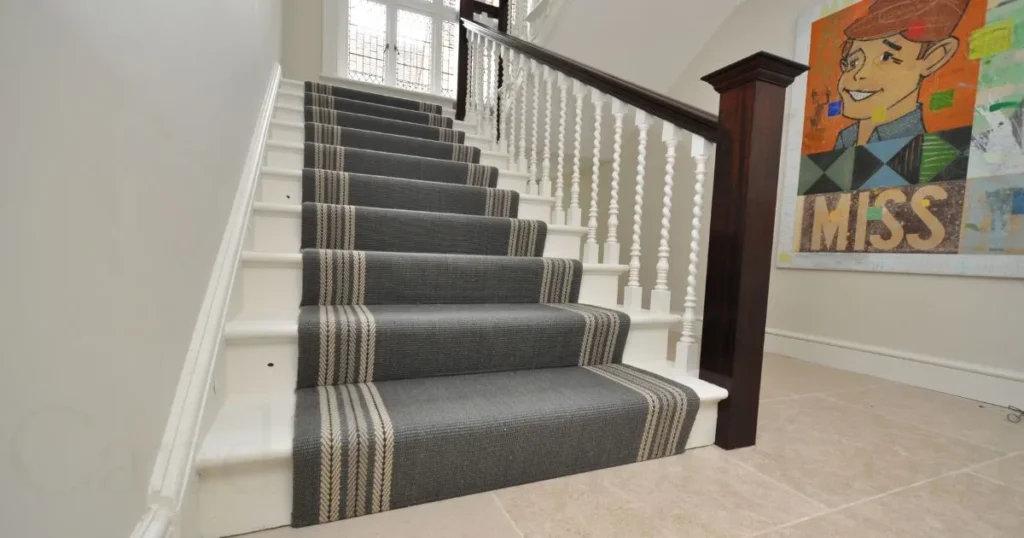
Minimum stair width by code is 36 inches for residential stairs. This measurement is the clear width between walls, not including handrails. Thirty-six inches allows one person to pass comfortably.
Most designers recommend 42 to 48 inches for better functionality. This wider dimension lets two people pass each other. It also makes moving furniture much easier. Trying to navigate a couch up 36-inch stairs is nearly impossible.
Headroom clearance must measure at least 6 feet 8 inches (80 inches) vertically. Measure from the nose of each tread straight up to the ceiling or any obstruction. Shorter clearances cause head injuries and feel claustrophobic.
The 27-step rule states that flights shouldn’t exceed 27 risers without a landing. Long unbroken flights cause fatigue and increase fall risk. A landing provides a rest point and improves safety. Most residential applications use landings after 12 to 13 feet of vertical rise.
Commercial stairs follow stricter requirements. The IBC typically requires 44 inches minimum width for commercial buildings. Handrail placement and egress rules differ too. Always check your local jurisdiction’s specific codes.
Building Code Requirements for Residential Stairs
The International Residential Code (IRC) governs most home construction. Section R311.7 covers stairways specifically. Maximum riser height sits at 7.75 inches. Minimum tread depth requires 10 inches, measured from nosing to nosing.
Riser consistency is strictly enforced. The greatest riser height in a flight cannot exceed the smallest by more than 3/8 inch. This prevents tripping hazards. Your foot expects each step to be the same height. Even small variations cause stumbles.
Handrails must be installed on at least one side when you have four or more risers. Handrail height ranges from 34 to 38 inches, measured vertically from the nosing. The gripping surface should be continuous along the entire run.
Nosing requirements call for a projection between 0.75 and 1.25 inches past the riser below. This overhang gives your toes extra room when descending. It reduces the feeling of tread depth being too shallow.
Landing dimensions must equal at least the width of the stairway. If your stairs are 36 inches wide, your landing needs to be 36 inches deep in the direction of travel. Doors opening onto landings cannot reduce this dimension during their swing.
Other Post: Magazine Dimensions: Magazine Size and Formats
Question’s
What is the standard size for stairs?
Standard residential stairs measure 36 to 48 inches wide, with 10 to 11-inch treads and 7 to 8-inch risers. This combination provides safe, comfortable movement for most users.
What is the 27 inch rule for stairs?
The 27-inch rule has two meanings. First, it limits flights to 27 steps maximum before requiring a landing. Second, some designers use it as a comfort formula where riser plus tread approximates 27 inches, though the 17-18 inch rule is more commonly applied.
What is the 7-Eleven rule for stairs?
The 7-11 rule pairs a 7-inch riser with an 11-inch tread. This creates a stair angle between 30 and 37 degrees, which feels most natural. Both IRC and IBC codes align with this standard.
What is the ideal rise and run of stairs?
The ideal rise measures 7 to 7.5 inches. The ideal run spans 10 to 11 inches. Together, these dimensions create comfortable stairs that don’t tire users quickly.
What is the 25 rule for stairs?
The 25 rule states that (2 × Riser Height) + Tread Depth should equal 24 to 26 inches. Example: (2 × 7″) + 11″ = 25″. This formula ensures natural walking rhythm and prevents fatigue.
Is a 9 inch step too high?
Yes, 9-inch risers are too high for comfort and safety. They increase fatigue and fall risk, especially for children and elderly users. The recommended maximum is 7.75 inches for residential stairs.
What is the standard for residential stairs?
Residential stairs should maintain a 30 to 38-degree angle. Each flight needs minimum 2 risers and maximum 18 risers. Landings are required between adjacent flights. All risers must be consistent within 3/8 inch.
What is the 17/18 rule for stairs?
The 17/18 rule states that Rise + Run should equal 17 to 18 inches. This matches the average person’s comfortable stride. Measurements below 17 or above 19 inches feel awkward and cause missteps.
What is the minimum width of stairs by code?
Code requires 36 inches minimum clear width for residential stairs. This measurement is wall-to-wall, not including handrail projection. Commercial stairs typically require 44 inches minimum.

Haru, the dedicated Admin of candimension.com, curates an informational blog on Can Dimension. With passion and expertise, Haru delivers insightful articles to educate and empower readers on this fascinating niche.