
Choosing the right wheelchair dimensions can feel overwhelming. Whether you’re measuring doorways, confirming a proper fit, or shopping for the first time, accurate size information matters for comfort and safety.
This guide breaks down standard wheelchair measurements, weight capacities, and space requirements.
Standard Wheelchair Dimensions and Measurements

A typical adult manual wheelchair measures approximately 25 inches wide and 36 inches tall. The overall length varies based on wheel size—transit wheelchairs with smaller wheels measure around 36 inches long, while self-propelled models with 24-inch rear wheels extend to 38 inches.
Standard wheelchair seat height sits at 19 to 19.5 inches from the ground. This height allows most users to rest their feet comfortably on footrests while maintaining proper posture and balance.
Wheelchair Sizing Chart
Understanding wheelchair size categories helps you select the right fit. Here’s a comprehensive breakdown of standard measurements:
Narrow Wheelchairs
- Seat width: 16 inches
- Overall width: 23 inches
- Weight capacity: 250 lbs
Best for: Smaller adults, navigating tight spaces
Standard Wheelchairs
- Seat width: 18 inches
- Overall width: 25 inches
- Weight capacity: 300 lbs
Best for: Average-sized adults
Wide Wheelchairs
- Seat width: 20 inches
- Overall width: 27 inches
- Weight capacity: 350 lbs
Best for: Larger-framed individuals
Extra Wide Wheelchairs
- Seat width: 22-24 inches
- Overall width: 29-31 inches
- Weight capacity: 400-450 lbs
Best for: Plus-sized adults needing extra room
Additional Measurements
Seat depth typically ranges from 16 inches (short) to 20 inches (deep), with 18 inches being most common. Backrest height varies from 16 inches (low back) for active users to 20+ inches (high back) for those needing additional support.
How to Measure for the Right Wheelchair Fit
Getting accurate body measurements ensures your wheelchair fits properly. You’ll need a standard tape measure and someone to assist you with measurements.
Seat Width Measurement: Measure across the widest part of your hips or thighs while sitting down. Add 1-2 inches to this measurement for comfortable clearance. This prevents pressure on your hips and allows easy repositioning.
Seat Depth Measurement: Sit with your back against a flat surface. Measure from your buttocks to the back of your knee, then subtract 2 inches. This space prevents pressure behind your knees and promotes healthy circulation.
Seat Height Measurement: Measure from the heel of your foot to the back of your knee while wearing your regular shoes. For self-propelled wheelchairs, ensure your heels can touch the floor when seated for better control.
Back Height Measurement: Measure from the wheelchair seat to just below your shoulder blades. Subtract 4 inches from this measurement. Proper backrest height supports your spine without limiting arm movement for propulsion.
Wheelchair Doorway and Space Requirements
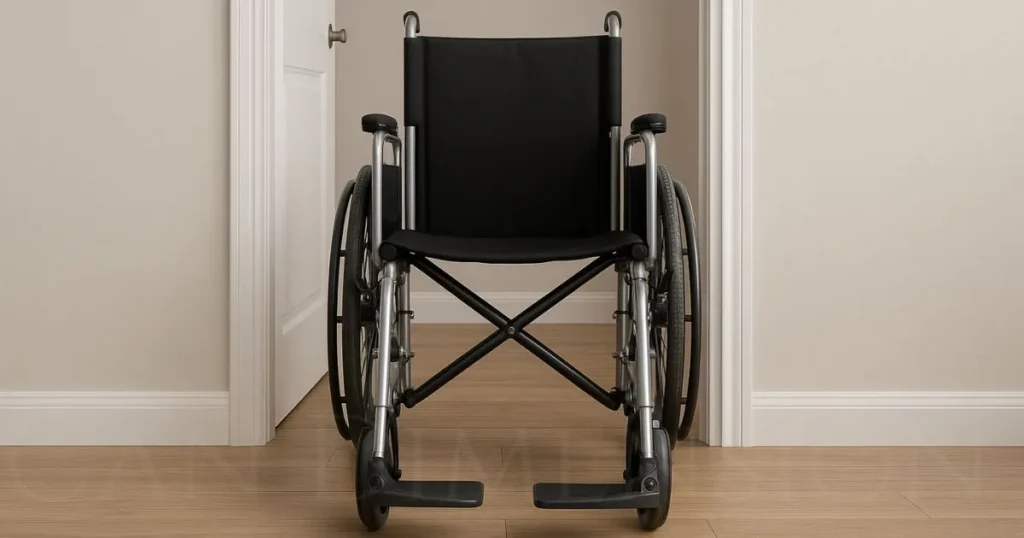
Standard doorway width in American homes measures 30 to 32 inches. Most standard wheelchairs at 25 inches wide pass through these openings comfortably with several inches of clearance on each side.
Will a wheelchair fit through a 30 inch door? Yes, absolutely. A 25-inch-wide wheelchair leaves 2.5 inches of space on each side when navigating a 30-inch doorway.
Clear floor space for wheelchair users requires a minimum of 30 by 48 inches for stationary positioning. This allows someone to approach desks, counters, or other fixtures comfortably without obstruction.
Turning radius needs approximately 60 inches (5 feet) of diameter for a complete 180-degree turn. Hallways should measure at least 36 inches wide for straight-line wheelchair passage, though 42 inches provides more comfortable navigation.
The narrowest wheelchair width available measures around 21 to 23 inches overall with a 16-inch seat. These compact models work well in older homes with tighter doorways or narrow hallways.
Other Dimensions: Badminton Court Dimensions: Size & Layout
Wheelchair Weight Guide
Standard Manual Wheelchairs
Weight: 25–40 lbs (without occupant)
- Lightweight Aluminum: Starts at ~25 lbs
- Heavy-Duty Steel: Up to 40+ lbs
Weight Capacity
Standard
Up to 300 lbs
Bariatric
500–700 lbs
(Reinforced frames & wider seats)Transport Wheelchairs
Weight: 15–25 lbs
- Easier for caregivers to lift & transport
- Short-term use only—with attendant pushing
- Not for self-propulsion
Quick Comparison
| Type | Weight (lbs) | Capacity (lbs) | Best For |
|---|---|---|---|
| Standard Manual | 25–40 | Up to 300 | Daily use |
| Bariatric | Varies (heavier) | 500–700 | Higher weight needs |
| Transport | 15–25 | Varies | Short trips |
This guide simplifies wheelchair selection—lightweight for ease, capacity for safety. Consult a professional for personalized advice!
Question’s
What size is a standard size wheelchair?
A standard wheelchair measures 25 inches wide overall with an 18-inch seat width. The length runs approximately 36 to 38 inches depending on wheel size, and the height reaches about 36 inches from ground to push handles.
Will a wheelchair fit through a 30 inch door?
Yes, standard wheelchairs easily fit through 30-inch doorways. With a 25-inch overall width, you’ll have comfortable clearance on both sides for smooth passage without scraping door frames.
What is the difference between 16 inch and 18 inch wheelchairs?
The measurement refers to seat width. A 16-inch wheelchair suits smaller-framed individuals weighing under 150 pounds, while an 18-inch chair accommodates average adults weighing 150-250 pounds more comfortably with better hip support.
How wide does a space need to be for a wheelchair?
Hallways need a minimum of 36 inches for straight passage. For turning around, you’ll need a 60-inch diameter circle (5 feet) to complete a full 180-degree rotation safely.
What is the narrowest wheelchair width?
The narrowest wheelchairs measure 21 to 23 inches overall width with a 16-inch seat. These compact models help navigate tight spaces like older homes, small bathrooms, or narrow store aisles.
What is a clear floor space for a wheelchair?
Clear floor space measures 30 inches by 48 inches—the minimum area needed for a wheelchair user to position themselves at desks, sinks, or other fixtures without obstruction or tight maneuvering.
What are the four basic measurements for a wheelchair?
The four essential measurements are: seat width (hip to hip), seat depth (buttocks to knee), seat height (heel to knee), and back height (seat to shoulder). These dimensions ensure proper fit and support.
What kind of wheelchair will Medicare pay for?
Medicare covers manual wheelchairs and power wheelchairs deemed medically necessary by your doctor. You’ll need a face-to-face examination and documentation showing the wheelchair is essential for daily activities in your home.
Is 32 inches wide enough for a wheelchair?
Yes, 32 inches provides ample clearance for standard wheelchairs. This width exceeds minimum accessibility standards and allows easy passage with room to spare on either side.
Conclusion
Proper wheelchair dimensions directly impact your daily comfort, mobility, and independence. Standard measurements work for most adults, but individual body proportions determine the best fit for your specific needs.
Take accurate measurements before purchasing, and consider consulting with healthcare professionals or mobility specialists. Annual reassessments ensure your wheelchair continues meeting your requirements as physical conditions change.

Haru, the dedicated Admin of candimension.com, curates an informational blog on Can Dimension. With passion and expertise, Haru delivers insightful articles to educate and empower readers on this fascinating niche.