L-shaped kitchens are among the most popular layouts in modern homes. They use two adjacent walls to create efficient cooking zones while leaving plenty of open space for an island.
Choosing the right kitchen island dimensions can transform your L-shaped layout from good to exceptional. The key is balancing size, clearance, and functionality to match your specific space and needs.
This guide covers everything you need to know about island sizing for L-shaped kitchens.
Standard Kitchen Island Dimensions for L-Shaped Kitchens
The ideal island size depends on your kitchen’s footprint. Discover clear guidelines to avoid confusion and create a functional space.
Island Size by Kitchen Layout
* Pro Tip: Always measure your space twice to match the perfect fit!
Height Specifications
Standard Counter
Prep & Matching Height
Bar Height
Raised Seating
Two-Tier
Prep + Dining
Critical Clearance Requirements
- Walkways: 36″ min (42-48″ recommended) for easy passage
- Work Aisles: 42″ min in front of appliances
- Placement Tip: Parallel to longer wall in 8-13 ft L-shapes
Ensures no door hits or cramped paths—measure clearances first!
Ready to design? Sketch your layout with these dimensions for a confusion-free kitchen upgrade!
The ideal island size depends entirely on your kitchen’s footprint. A small 10×10 kitchen needs a different approach than a spacious 15×20 layout.
Small L-Shaped Kitchens
Compact spaces between 10×10 and 12×12 feet work best with smaller islands. A 4 feet by 2 feet island provides essential workspace without blocking traffic flow.
These smaller islands still deliver value. They offer approximately 8 square feet of countertop space for meal prep. Built-in drawers add storage for utensils, towels, and cooking tools.
Medium L-Shaped Kitchens
Kitchens measuring 12×15 feet can accommodate standard-sized islands. The classic 6 feet by 3 feet dimension is the most popular choice for mid-sized L-shaped layouts.
This size provides 18 square feet of workspace. It’s large enough to seat 2-3 people comfortably along one side. You get substantial storage with base cabinets and deep drawers.
Large L-Shaped Kitchens
Spacious layouts of 15+ feet can handle statement islands. Islands measuring 8 feet by 4 feet or larger become the kitchen’s focal point.
Large islands offer 32+ square feet of counter space. They can incorporate sinks, cooktops, or dishwashers. Seating expands to accommodate 4-6 bar stools for entertaining.
Height Specifications
Standard counter height measures 36 inches from floor to countertop. This height works perfectly for food preparation and matches your perimeter counters.
Bar height islands stand 42 inches tall and create a raised seating area. Two-tier islands combine both heights—36 inches for prep work and 42 inches for dining.
Critical Clearance Requirements
Walkway clearance is non-negotiable for functional kitchens. You need at least 36 inches between your island and surrounding cabinets or appliances.
The recommended clearance is 42-48 inches for comfortable movement. This spacing allows two people to pass each other easily. It provides room for opening appliance doors without blocking pathways.
Work aisles require 42 inches minimum in front of major appliances. This ensures dishwasher doors, oven doors, and refrigerator doors can open fully without hitting the island.
L-shaped kitchens with long linear lengths of 8-13 feet need careful island placement. The island should sit parallel to the longer wall while maintaining proper clearance on all sides.
L-Shaped Kitchen Island Layout Ideas
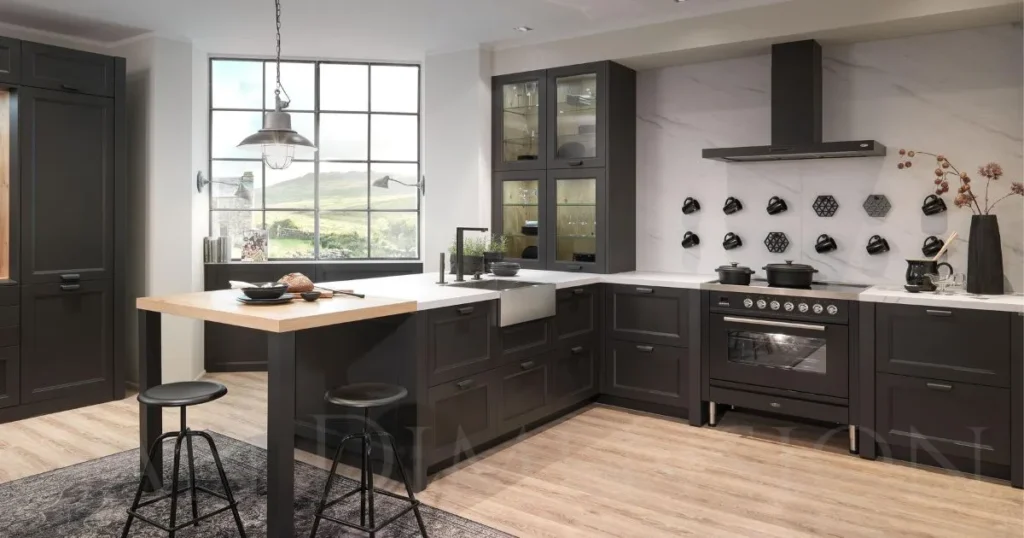
Rectangle islands are the classic choice for L-shaped kitchens. Their straight edges complement the linear walls and maximize usable counter space.
Rectangular Island for Classic L-Shapes
Dimensions range from 6-8 feet long and 3-4 feet wide. This configuration suits most standard residential kitchens with L-shaped layouts.
The rectangular design provides excellent prep space down the center. Both long sides can incorporate storage with cabinets and drawers. One end typically accommodates seating with 24 inches per person for bar stools.
This layout seats 3-4 people comfortably along a single side. A 6-foot island fits two stools, while an 8-foot version accommodates three to four seats.
Compact Island for Small L-Shaped Kitchens
The 4 feet by 2 feet footprint works perfectly in tight spaces. Despite the smaller size, these islands deliver meaningful functionality.
Consider mobile or rolling islands for maximum flexibility. Wheels allow you to move the island aside when you need extra floor space. Lock the casters in place during food prep or dining.
Compact islands excel at targeted storage solutions. Deep drawers hold pots and pans. Open shelving displays cookbooks or decorative items. Towel bars attach to the sides for easy access.
Extended Island for Large L-Shaped Layouts
Islands measuring 8+ feet long and 4+ feet wide transform spacious L-shaped kitchens. These statement pieces become multi-functional workstations.
Large islands can incorporate secondary sinks for efficient meal prep. A separate sink lets one person wash vegetables while another uses the main sink. Some homeowners add cooktops to create a cooking zone within the island.
Multi-level designs combine prep and dining heights. The lower 36-inch section provides workspace. A raised 42-inch bar offers seating and creates visual interest.
Seating expands to 4-6 people with proper planning. An 8-foot island comfortably seats four adults. A 10-foot design accommodates five to six bar stools with adequate elbow room.
Angled Island for Unique Flow
Custom angled islands break away from traditional rectangles. These designs soften the sharp geometry of L-shaped layouts and improve traffic patterns.
Angled islands create natural conversation zones by orienting seats toward gathering areas. The diagonal placement can improve sight lines between the kitchen and adjacent living spaces.
Rounded or curved edges enhance safety in busy kitchens. They eliminate sharp corners that children might bump into. The softer lines add an elegant, contemporary aesthetic.
Seating Considerations
Plan 24 inches of linear space per person for comfortable seating. This measurement prevents guests from feeling cramped or bumping elbows.
A minimum 12-inch overhang is essential for knee and leg room. The countertop must extend beyond the base cabinets to create space underneath. 15-inch overhangs provide even more comfort for extended sitting during meals or work sessions.
Island length directly determines seating capacity. Two seats require at least 4-5 feet. Three seats need a minimum 72 inches (6 feet). Four seats demand at least 96 inches (8 feet) of island length.
Design Tips for L-Shaped Kitchen Islands
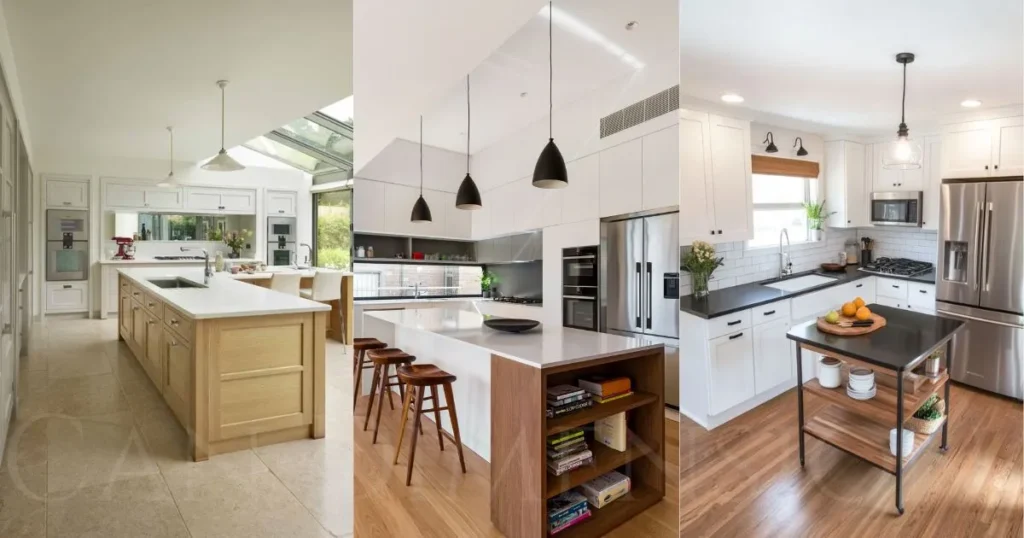
Storage maximization starts with smart cabinet choices. Deep drawers work better than traditional cabinets for heavy pots, pans, and appliances.
Storage Solutions
Pull-out drawers provide easy access to items stored in the back. Full-extension glides let drawers open completely, revealing everything inside. This beats traditional cabinets where items get lost in dark corners.
Open shelving creates display opportunities for cookbooks, decorative bowls, or frequently-used items. These shelves break up solid cabinet fronts and add visual interest. They keep everyday items within arm’s reach.
Hidden compartments organize small appliances like blenders, mixers, and food processors. Appliance garages with retractable doors keep countertops clutter-free. Pop-up shelves bring heavy mixers to counter height with minimal effort.
Built-in wine coolers or beverage fridges add convenience for entertainers. These appliances fit seamlessly into island bases. They keep drinks cold without requiring trips to the main refrigerator during parties.
Material Selections
Quartz countertops resist stains and scratches better than most natural stones. They never need sealing and handle hot pans without damage. Quartz comes in hundreds of colors and patterns to match any design style.
Butcher block creates dedicated prep zones perfect for chopping vegetables or rolling dough. The warm wood adds natural texture and contrast. Regular oiling maintains the surface and prevents water damage.
Contrasting island colors define the space as a focal point. Many homeowners choose darker island cabinets while keeping perimeter cabinets light. This two-tone approach adds depth and visual interest to the kitchen.
Waterfall edges deliver modern sophistication. The countertop material flows down the sides of the island to the floor. This seamless look works especially well with bold stone patterns or solid colors.
Integrated Features
Secondary sinks improve workflow efficiency in busy kitchens. A small prep sink on the island lets multiple cooks work simultaneously. One person washes produce while another uses the main sink for dishes.
Electrical outlets every 4 feet meet modern kitchen demands. Islands need power for small appliances, phone chargers, and laptops. Pop-up outlets hide flush with the counter when not in use.
USB charging stations keep devices powered without bulky adapters. Built-in USB ports blend into the island design while providing convenient charging locations. These features appeal especially to families with multiple devices.
Task lighting above islands illuminates work surfaces effectively. Pendant lights add style while providing focused light for food prep. Space fixtures 30-36 inches apart and hang them 30-36 inches above the counter.
Visual Enhancement
Two-tone cabinetry creates striking contrast between islands and perimeter cabinets. Popular combinations include white perimeter cabinets with navy or charcoal islands. This approach adds personality without overwhelming the space.
Statement hardware elevates island design from basic to custom. Oversized pulls in brass, black, or brushed nickel add jewel-like accents. Coordinating hardware between island and perimeter cabinets creates cohesive design flow.
Decorative corbels or legs add architectural detail to island ends. These elements provide visual weight and traditional charm. They work especially well in transitional or farmhouse-style kitchens.
Other Dimensions: Standard Stair Dimensions: Staircase Sizes & Calculation
FAQ’s
What is the standard size for a kitchen island?
A standard kitchen island measures 36 inches high, 3 to 4 feet wide, and 5 to 7 feet long. For seating areas, height increases to 42 inches with a minimum 12-inch overhang for legroom. Always maintain 36-42 inches of clearance around all sides.
Can I fit an island in a 12×12 kitchen?
Yes, you can fit an island in a 12×12 L-shaped kitchen with careful planning. A narrow island measuring 18-24 inches wide by 4-5 feet long works best. Maintain the recommended 42-inch clearance on all sides. Mobile islands offer flexibility for smaller spaces.
How long should an island be for 3 stools?
An island needs at least 72 inches (6 feet) of length to seat three people comfortably. Allow 24 inches of counter space per stool to prevent crowding. For more spacious seating, consider an 8-foot island that provides extra elbow room.
What size island needs to fit 4 seats?
An island should measure at least 8 feet (96 inches) long to seat four people comfortably. This provides approximately 24 inches per person. Include a minimum 12-inch overhang for adequate knee and legroom under the counter.
Can you fit an island in a 10×10 kitchen?
A kitchen island can work in a 10×10 L-shaped kitchen if space permits proper clearance. Choose a compact design measuring approximately 4 feet by 2 feet. Consider a narrow peninsula-style island that doesn’t require walkway space on all sides.
Should an island overhang 12 or 15 inches?
A 12-inch overhang provides adequate knee space for seating in smaller kitchens. For larger islands or maximum comfort during extended sitting, choose a 15-inch overhang. Deeper overhangs work better for dining and working at the island.
What is the 3×4 kitchen rule?
The 3×4 kitchen rule means creating three main work zones—cooking, cleaning, and storage—with at least 4 feet of counter space each. Alternatively, it refers to the work triangle where each leg measures 4-9 feet between major appliances for optimal workflow efficiency.
What is replacing the kitchen island in 2025?
Hardwearing worktables and freestanding furniture pieces are emerging as alternatives to built-in islands. These offer flexibility and a timeless aesthetic. However, islands remain extremely popular in L-shaped layouts due to their superior functionality and storage capacity.
How big is an average island?
The average kitchen island measures 6 feet long by 3 feet wide (72 inches x 36 inches). Standard height is 36 inches from floor to countertop. This size accommodates most medium-sized kitchens and provides ample workspace and storage.
Conclusion
L-shaped kitchens and islands form a perfect partnership. The open configuration provides natural space for a functional island that enhances workflow and adds valuable storage.
Standard dimensions of 6 feet by 3 feet work well for most medium-sized spaces. Smaller kitchens need compact 4×2 designs, while larger layouts accommodate 8×4 statement pieces.
The 42-48 inch clearance rule determines whether an island fits your space. Measure carefully, test with mock-ups, and prioritize comfortable movement over maximum island size.