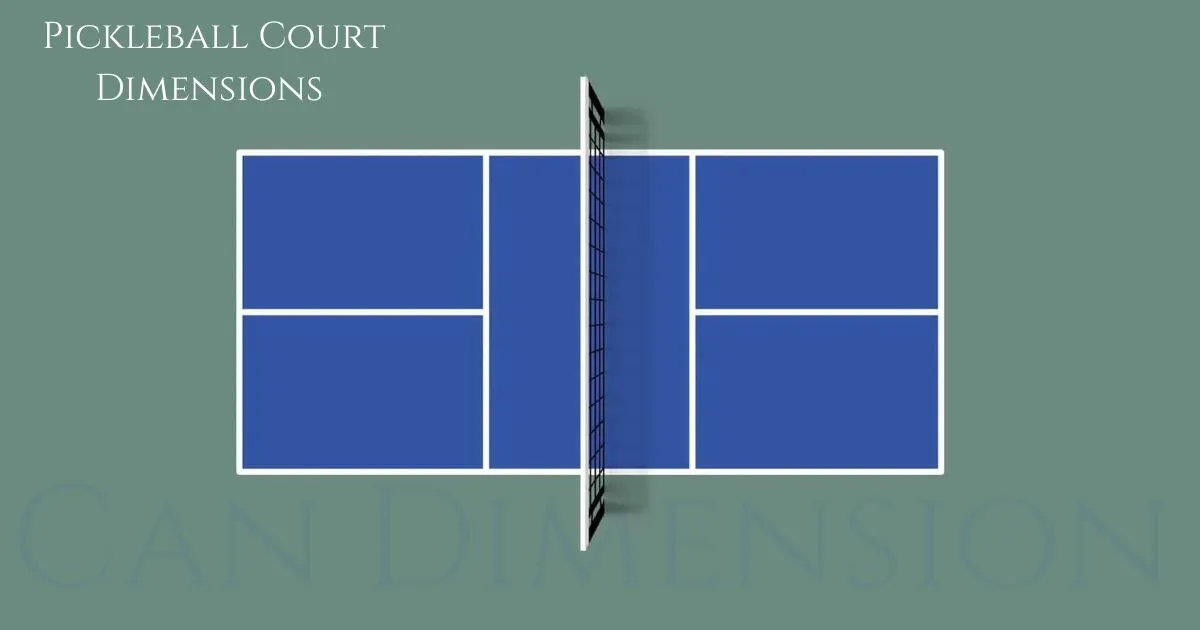
Pickleball has become America’s fastest-growing sport, with over 36.5 million players nationwide. Whether you’re building a backyard court or planning a community facility, understanding proper pickleball court dimensions and surface options is essential.
This guide covers official measurements, space requirements, surface materials, and the latest 2025 rules. You’ll learn exactly what you need to create a regulation court that’s safe, playable, and built to last.
Official Pickleball Court Dimensions and Layout
Standard Pickleball Court Measurements
Overall Court Layout (44 ft × 20 ft)
Same dimensions for singles and doubles play. All lines are 2 inches wide, painted white or contrasting color.
Non-Volley Zone (Kitchen) – 7 ft from Net on Each Side
No volleying allowed here – perfect for dinking!
Service Courts (15 ft × 10 ft Each)
Divided by centerline for diagonal serves. Follows USA Pickleball standards.
Standard Court Measurements
A regulation pickleball court measures 44 feet long by 20 feet wide. This is the actual playing surface where all the action happens. The court uses the same dimensions for both singles and doubles play, unlike tennis.
The non-volley zone, commonly called the kitchen, extends 7 feet from the net on both sides. This 14-foot-wide zone is where the famous “dinking” battles take place. All court lines are 2 inches wide and typically painted in white or a contrasting color.
The net height stands at 36 inches at the sidelines and dips to 34 inches at the center. Each side has two service courts measuring 15 feet long by 10 feet wide, divided by the centerline. These precise measurements follow USA Pickleball official standards.
Pickleball vs Tennis Court Size Comparison
Is a pickleball court the same size as a tennis court? No, not even close. A tennis court measures 78 feet long by 36 feet wide, making it nearly four times larger than a pickleball court.
This size difference is actually an advantage. You can fit four regulation pickleball courts on a single tennis court with proper layout. Many communities convert underused tennis facilities into multi-court pickleball complexes for this exact reason.
Specialty Court Variations
What size is a dink pickleball court? A dink court, also called a mini court, typically measures 20 feet by 20 feet. These smaller practice courts focus on the non-volley zone and help players master soft game techniques.
What size is a skinny pickleball court? Skinny singles courts are half the standard width, approximately 10 feet wide by 44 feet long. These training courts improve footwork, court coverage, and shot precision without a partner.
Space Requirements for a Pickleball Court
Absolute Minimum: 30 ft Wide × 60 ft Long
For careful recreational home use – limited safety buffers!
Barely provides safety – use with caution to avoid injuries.
Tournament-Grade: 34 ft Wide × 64 ft Long
Recommended for safe play with 5 ft side buffers & 10 ft end zones.
Includes essential buffers for safe, tournament-level play.
Quick Comparison
| Type | Width | Length | Side Buffer | End Buffer | Best For |
|---|---|---|---|---|---|
| Minimum | 30 ft | 60 ft | ~5 ft | ~8 ft | Home (Careful Use) |
| Tournament | 34 ft | 64 ft | 5 ft | 10 ft | Competitive Play |
| Professional | >34 ft | >64 ft | >5 ft | >10 ft | Spectator Events |
Professional setups vary but prioritize extra space for comfort and crowds.
These visuals break down the space needs clearly to help plan your court without confusion. Embed this HTML in your WordPress post using the Custom HTML block!
Minimum vs Recommended Space
How much space do you need to make a pickleball court? The absolute minimum is 30 feet wide by 60 feet long, but this barely provides safety buffers. For recreational home courts, this works if you’re careful.
Tournament-grade courts require 34 feet by 64 feet of total space. This includes 10-foot buffer zones behind each baseline and 5-foot margins along the sidelines. Professional facilities often use even larger dimensions for spectator comfort.
Buffer Zones and Safety Considerations
Run-off areas prevent injuries when players chase balls outside the court boundaries. Without adequate space, athletes risk collision with fences, walls, or equipment. A 10-foot buffer behind baselines is considered standard practice.
Multi-court facilities need 12 to 15 feet between adjacent courts. This spacing prevents balls from one court rolling onto active play areas. It also gives players confidence to make aggressive plays without fear of interference.
Best Surfaces for Pickleball Courts
Surface Material Options Compared
Asphalt remains the most popular choice for outdoor pickleball courts. It costs $5 to $10 per square foot installed and provides excellent ball bounce. The hard surface requires proper drainage and occasional resurfacing every 5 to 7 years.
Concrete surfaces offer superior longevity, lasting 20+ years with minimal maintenance. They cost $8 to $15 per square foot but resist cracking better than asphalt. Concrete works exceptionally well in regions with freeze-thaw cycles.
Acrylic sport court systems feature cushioned layers that reduce joint impact by up to 40%. These professional-grade surfaces cost $12 to $20 per square foot. Top facilities use brands like Plexipave or DecoTurf for optimal performance.
Modular tiles snap together without adhesives, making them ideal for temporary or portable courts. They cost $3 to $6 per square foot and work on any flat surface. However, they don’t provide the same consistent bounce as permanent installations.
What is the Cheapest Surface for a Pickleball Court?
Asphalt delivers the best value for permanent outdoor courts. A standard 30′ x 60′ court requires 1,800 square feet, costing approximately $9,000 to $18,000 for complete installation including base preparation.
DIY modular tiles can reduce costs to $5,400 to $10,800 for materials only. You’ll need a perfectly flat concrete or asphalt base underneath. Labor savings make this attractive for budget-conscious homeowners..
What Kind of Surface is Best for Pickleball?
Cushioned acrylic systems represent the gold standard for serious players. These multi-layer surfaces provide consistent ball response, excellent traction, and joint protection. The textured finish prevents slipping even when slightly wet.
Climate plays a crucial role in surface selection. Southern states need UV-resistant coatings to prevent fading and cracking. Northern facilities require flexible materials that withstand temperature extremes without damage.
Planning Your Pickleball Court Installation
Cost Breakdown and Budgeting
Total court construction costs range from $15,000 to $45,000 for basic residential installations. Commercial facilities spend $30,000 to $75,000 per court with premium amenities like lighting and fencing.
Site preparation accounts for 30-40% of total costs. Excavation, grading, and base compaction create the foundation for long-term performance. Cutting corners here guarantees expensive repairs within years.
Surface installation runs $9,000 to $25,000 depending on material choice. Add $2,000 to $5,000 for professional line painting and color coating. Net systems cost $200 for portable setups to $2,000 for permanent posts with tensioning systems.
Professional vs DIY Installation
Hire professionals for base preparation and drainage even if you handle other tasks yourself. Improper grading causes pooling, cracks, and premature failure. Licensed contractors understand local soil conditions and building codes.
Permits and zoning approval are required in most municipalities for permanent court construction. Setback requirements from property lines, noise ordinances, and HOA restrictions can derail projects. Research these before breaking ground.
Timeline expectations range from 2 to 6 weeks for complete installation. Weather delays, material delivery, and curing times affect scheduling. Plan construction during dry seasons for best results.
Question’s
What are the dimensions of a pickleball court?
The playing surface measures 44 feet long by 20 feet wide, with a 7-foot non-volley zone on each side of the net.
How much space do you need to make a pickleball court?
Minimum space is 30′ x 60′, but 34′ x 64′ is recommended for safety buffers and comfortable play.
What is the 10 second rule in pickleball?
Servers have 10 seconds after the score is called to complete their serve. Violations result in a fault.
What size is a dink pickleball court? Practice dink courts typically measure 20′ x 20′, focusing on the non-volley zone area for skill development.
What size is a skinny pickleball court?
Skinny singles courts are approximately 10 feet wide by 44 feet long, exactly half the standard width.
What is the cheapest surface for a pickleball court?
Asphalt offers the best value at $5-$10 per square foot, with modular tiles being the most affordable DIY option.
What kind of surface is best for pickleball?
Cushioned acrylic systems provide optimal performance, durability, and player safety, making them the preferred choice for serious facilities.
What are the new 2025 pickleball rules?
Major changes include stricter paddle surface regulations, clarified service motion requirements, and legal let serves in tournament play.
Is a pickleball court the same size as a tennis ball court?
No, tennis courts are nearly four times larger at 78′ x 36′, while pickleball courts measure 44′ x 20′.
Conclusion
Proper pickleball court dimensions and surface selection determine your court’s playability, safety, and longevity. Standard measurements of 44′ x 20′ with adequate buffer zones create regulation playing conditions.
Choose surfaces based on your budget, climate, and usage intensity. Asphalt offers affordability while cushioned acrylic delivers premium performance. Always prioritize proper base preparation and drainage over surface material.

Haru, the dedicated Admin of candimension.com, curates an informational blog on Can Dimension. With passion and expertise, Haru delivers insightful articles to educate and empower readers on this fascinating niche.