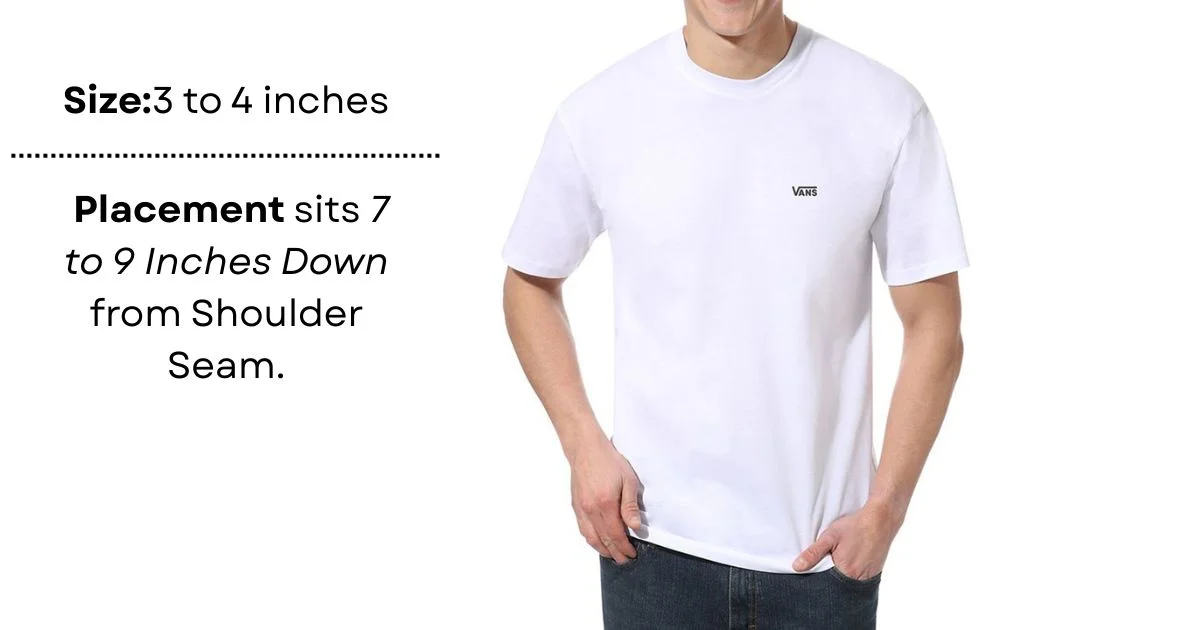
Getting your left chest logo placement right makes the difference between amateur branding and professional results. The wrong size or position can ruin an entire order of custom apparel.
This guide gives you exact measurements, proven placement techniques, and industry standards used by professional embroiderers and screen printers across the USA.
Standard Left Chest Logo Size
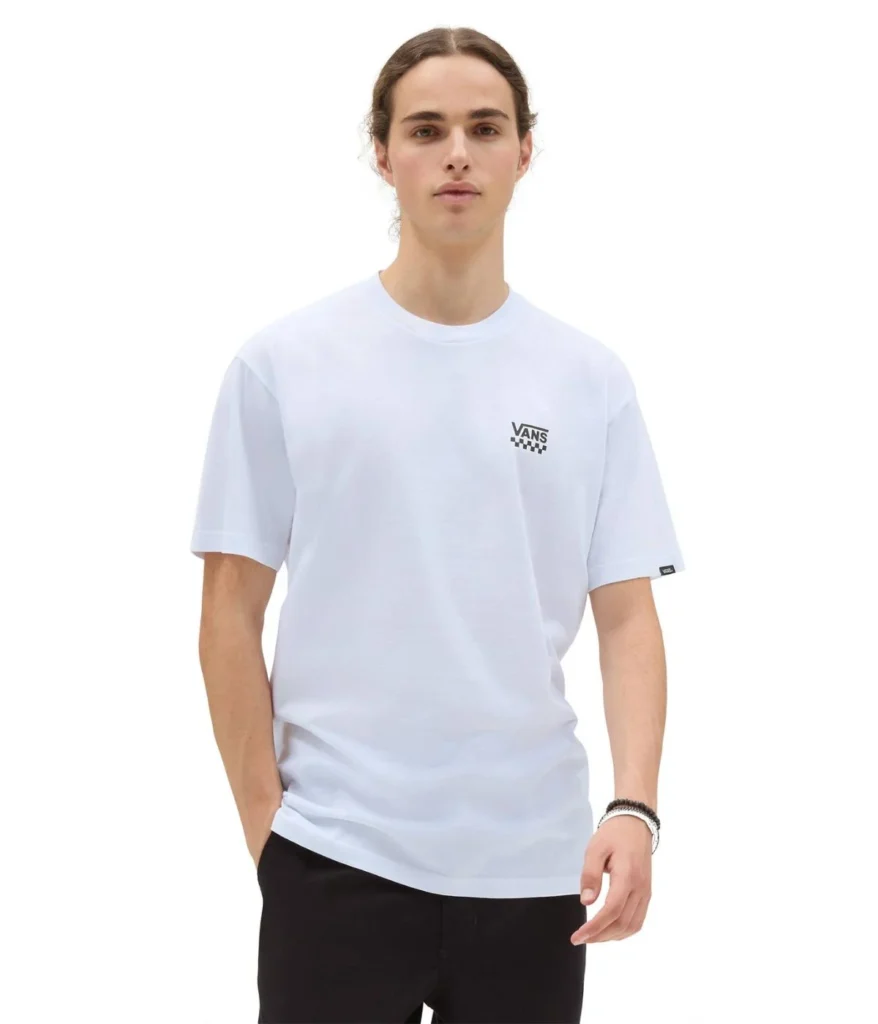
The standard left chest logo size ranges from 3 to 4 inches in width. This measurement works for 90% of adult garments including t-shirts, polos, and jackets.
Most professional decorators recommend 3.5 inches as the sweet spot. This size looks balanced on different body types without overwhelming the garment or appearing too small.
Size Guidelines by Garment Type
Polo shirts and dress shirts perform best with logos between 3.5 and 4 inches wide. The structured collar creates a natural frame that supports slightly larger branding.
T-shirts and casual wear typically use 3 to 3.5 inches. The softer neckline requires a more modest approach to maintain visual balance.
Hoodies and jackets can handle 4 to 4.5 inches because of their heavier fabric weight and larger surface area. The extra size ensures visibility against bulkier materials.
Women’s garments generally need smaller sizing at 3 to 3.5 inches. The narrower chest area and different fit style require proportion adjustments compared to men’s clothing.
Height and Aspect Ratio Rules
Never stretch or squash your logo to fit a specific measurement. Always maintain the original aspect ratio to preserve design integrity.
If your logo is 4 inches wide with a 2:1 ratio, the height should be exactly 2 inches. Distorted logos signal unprofessional work and damage brand credibility.
Perfect Left Chest Logo Placement / Positioning Techniques
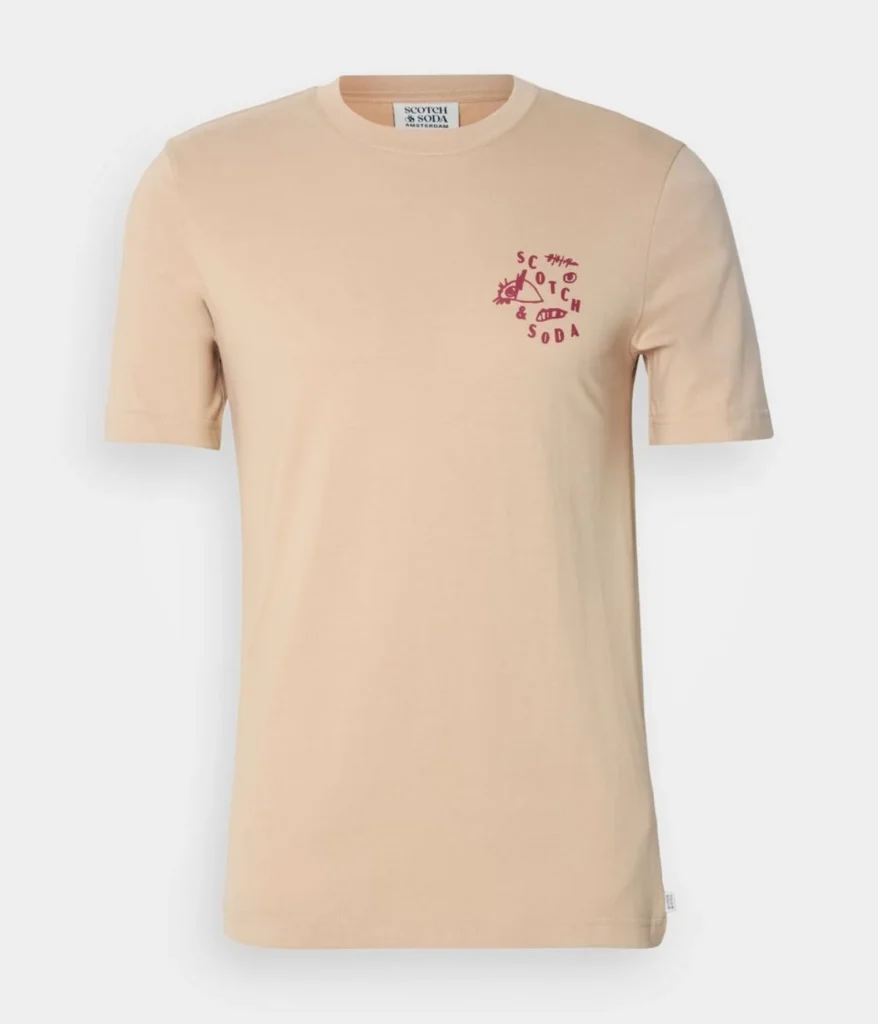
Proper left chest logo positioning follows a proven measurement system that works across all garment sizes. The standard placement sits 7 to 9 inches down from the shoulder seam.
Measure 4 to 6 inches inward from the center of the chest. This creates optimal visibility while respecting the natural anatomy and garment construction.
The Professional Measurement Method
Start at the shoulder seam where the sleeve attaches to the body. Use a flexible tape measure and mark 7 inches straight down for medium and large sizes.
For small sizes, reduce to 6.5 inches. For XL and above, increase to 8 or 9 inches. Proportional scaling prevents logos from sitting too high or low on different body types.
Placement Adjustments for Neckline Styles
Crew neck shirts use the standard 7 to 9 inch measurement without modification. The round neckline provides a consistent reference point.
V-neck garments need logos positioned slightly lower at 8 to 9.5 inches. The deeper neckline changes the visual balance and requires compensation.
Polo shirts with collars work best at 7.5 to 8.5 inches from the shoulder seam. The collar adds height that affects perceived placement.
Working Around Chest Pockets
When a left chest pocket exists, you have two professional options. Place the logo centered on the pocket itself, typically 0.5 inches from all pocket edges.
Alternatively, position the logo above the pocket with 1 to 1.5 inches of clearance. Never place logos partially overlapping pockets as this creates visual confusion.
Left Chest Logo Embroidery vs. Print
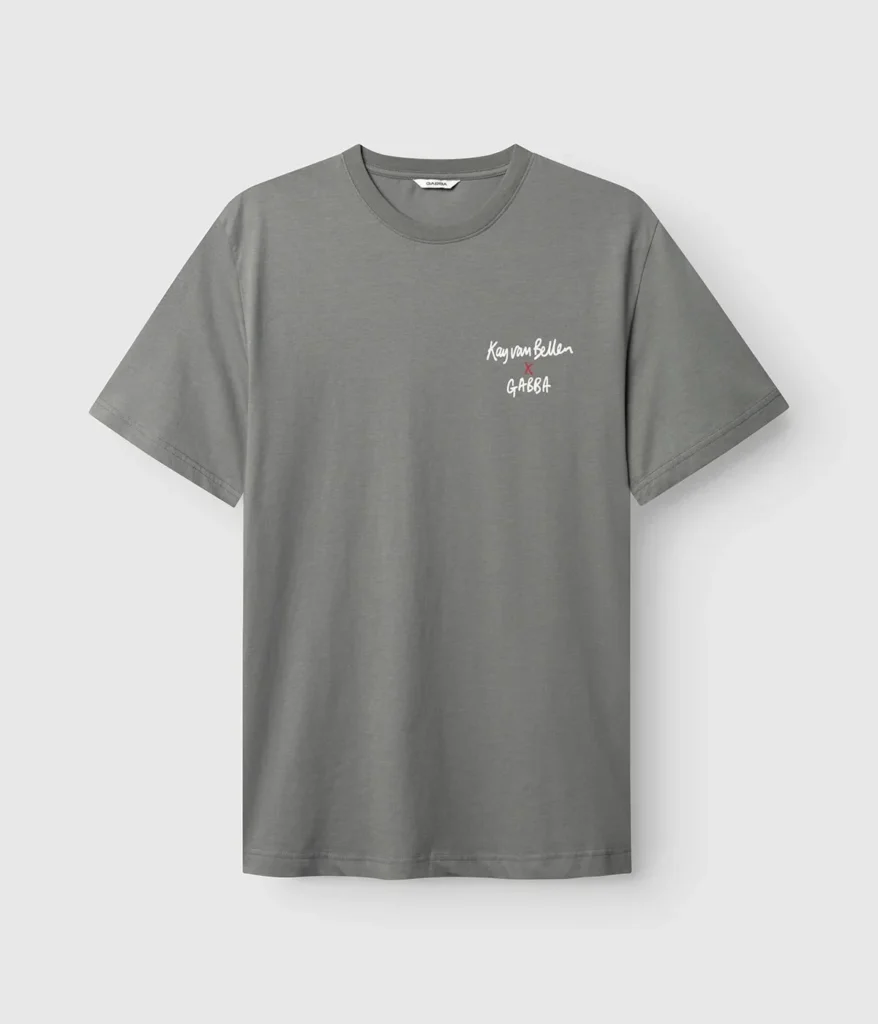
Embroidered logos require different size considerations than printed designs. Thread thickness and stitch density create physical dimension that affects how size appears.
The general rule states embroidery should be 10 to 15% smaller than equivalent printed logos. A 4-inch print translates to 3.4 to 3.6 inches in embroidery.
Why Embroidery Sizing Differs
Thread creates raised texture that makes designs appear larger than their actual measurements. Excessive embroidery size causes puckering, distortion, and production failures.
Small details get lost in embroidery below 3 inches width. Thin lines, small text, and intricate elements need minimum sizing to maintain legibility through stitching.
Print Method Flexibility
Direct-to-garment printing handles fine details at smaller sizes better than any other decoration method. You can successfully print detailed logos at 2.5 inches if design complexity requires it.
Screen printing offers moderate detail capability between 3 and 4.5 inches. The ink layer sits flatter than embroidery, allowing slightly more size variation without visual issues.
Heat transfer vinyl works well from 3 to 5 inches but adds slight texture similar to embroidery. Factor in the raised feel when determining final dimensions.
Cost Implications by Size
Embroidery pricing directly correlates to stitch count, which increases with logo size. A 4-inch logo might cost 40% more than a 3-inch version of the same design.
Print methods typically use flat pricing within reasonable size ranges. Screen printing costs stay consistent from 3 to 4.5 inches, making larger sizes more economical in print than embroidery.
Mistakes (How to Fix Them)
Oversized logos represent the most frequent error in custom apparel decoration. Anything over 4.5 inches starts looking like a billboard rather than professional branding.
The opposite problem occurs when businesses go too small at 2 inches or less. Tiny logos lack impact and appear timid, undermining brand confidence.
The 2:1 Ratio Mistake Explained
A 2:1 ratio logo means the width measures twice the height (example: 4 inches wide by 2 inches tall). These horizontal logos present unique placement challenges.
Many decorators wrongly center these wide logos the same as square designs. Horizontal logos need slight upward adjustment by 0.25 to 0.5 inches to compensate for their elongated shape.
Off-Center Disasters
Eyeballing logo placement instead of measuring creates inconsistent results across a production run. Each garment ends up slightly different, destroying professional appearance.
Always use measuring tools and marking methods. Create a placement template for repeat orders to ensure perfect consistency across hundreds of pieces.
Ignoring Garment Size Variations
The biggest mistake involves using identical placement measurements for small through 5XL sizes. A logo positioned perfectly on a medium sits too high on an XL.
Adjust placement proportionally as size increases. Add 0.5 inches to the drop measurement for each size category above large. Subtract 0.5 inches for sizes below medium.
Skipping the Test Sample
Never approve production without seeing a physical sample on the actual garment style you’re ordering. Digital mockups don’t show real-world fabric behavior, drape, or true size perception.
Order one test piece with your exact logo, size, and placement. Evaluate it on an actual person wearing the garment naturally. This catches issues before expensive bulk production.
Other Blog: Basketball Court Dimensions: Size & Marking
Question’s
What is the standard size for a left chest logo?
The standard left chest logo size is 3.5 to 4 inches in width for adult garments. Women’s apparel typically uses 3 to 3.5 inches, while men’s clothing accommodates 3.5 to 4 inches comfortably.
Where to put logo on left chest?
Measure 7 to 9 inches down from the shoulder seam and 4 to 6 inches inward from center chest. The exact measurement depends on garment size, with larger sizes requiring lower placement.
What is the correct placement of logos?
Correct logo placement balances visual appeal with functional garment design. For left chest positioning, the logo should sit where it’s immediately visible without interfering with necklines, pockets, or seams.
What is the correct size for a logo?
Logo size depends on placement location, decoration method, and garment type. Left chest logos work best at 3 to 4 inches. Full front designs can range from 10 to 14 inches. Back designs often span 11 to 14 inches for maximum impact.
What is a 2:1 ratio logo?
A 2:1 ratio logo has width measuring twice its height (example: 4 inches wide by 2 inches tall).
What are common logo size mistakes?
Going too large (over 4.5 inches) or too small (under 2.5 inches) creates unprofessional results.
What size is left chest embroidery?
Left chest embroidery typically measures 3 to 3.75 inches wide. Embroidered logos should be slightly smaller than printed equivalents because thread dimension makes designs appear larger.
What is a chest measurement on a shirt?
Chest measurement indicates the garment’s circumference at the widest point across the chest area. This measurement helps determine proper logo sizing and placement proportions. A 42-inch chest typically accommodates a 4-inch logo, while a 36-inch chest works better with 3 to 3.5 inches.
Where to place a logo on a sweater?
Sweater logo placement follows the same 7 to 9 inch rule from the shoulder seam. Thicker knit fabrics handle embroidery better than thin materials. Consider going slightly larger at 3.75 to 4 inches on heavy sweaters to maintain visibility against textured fabric.
Conclusion
Perfect left chest logo size and placement comes down to following proven measurements and making smart adjustments for your specific situation. Stick to the 3.5 to 4 inch width range, measure carefully from shoulder seams, and always test before bulk ordering.
Your logo represents your brand identity. Taking time to get the sizing and positioning exactly right ensures professional results that build credibility and trust with everyone who sees your

Haru, the dedicated Admin of candimension.com, curates an informational blog on Can Dimension. With passion and expertise, Haru delivers insightful articles to educate and empower readers on this fascinating niche.